.png)
Last week in Singapore, our co-founder and Head of AI Vlad Vinogradov presented Bioptic’s latest research at AAAI 2026.
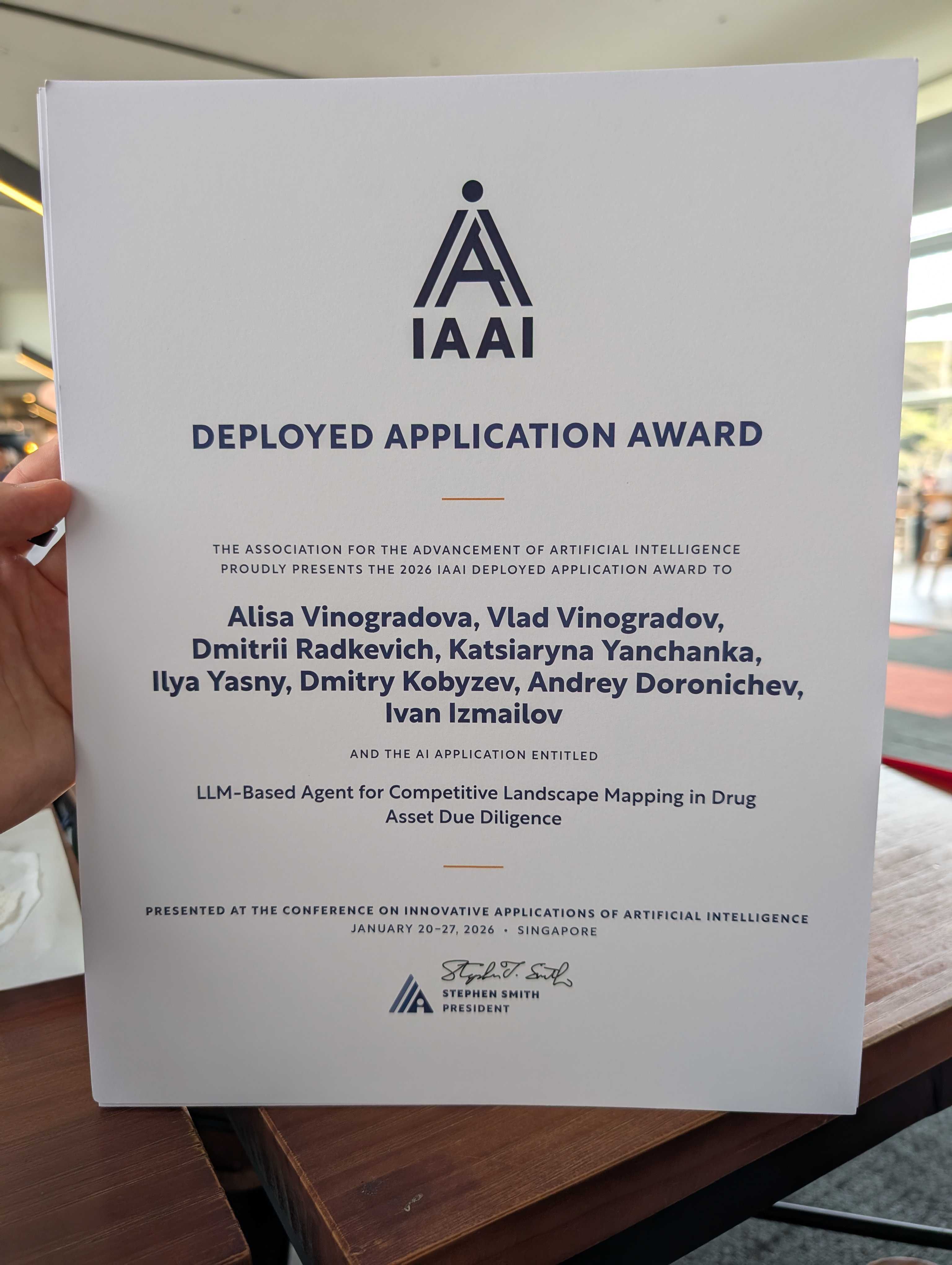
The paper — LLM-Based Agents for Competitive Landscape Mapping in Drug Asset Due Diligence — is now peer-reviewed and received the AAAI Deployed Application Award. That matters to us. This isn’t a toy benchmark or a demo. It’s AI that’s live, used by real pharma and biotech teams, and measurably changes how diligence gets done.
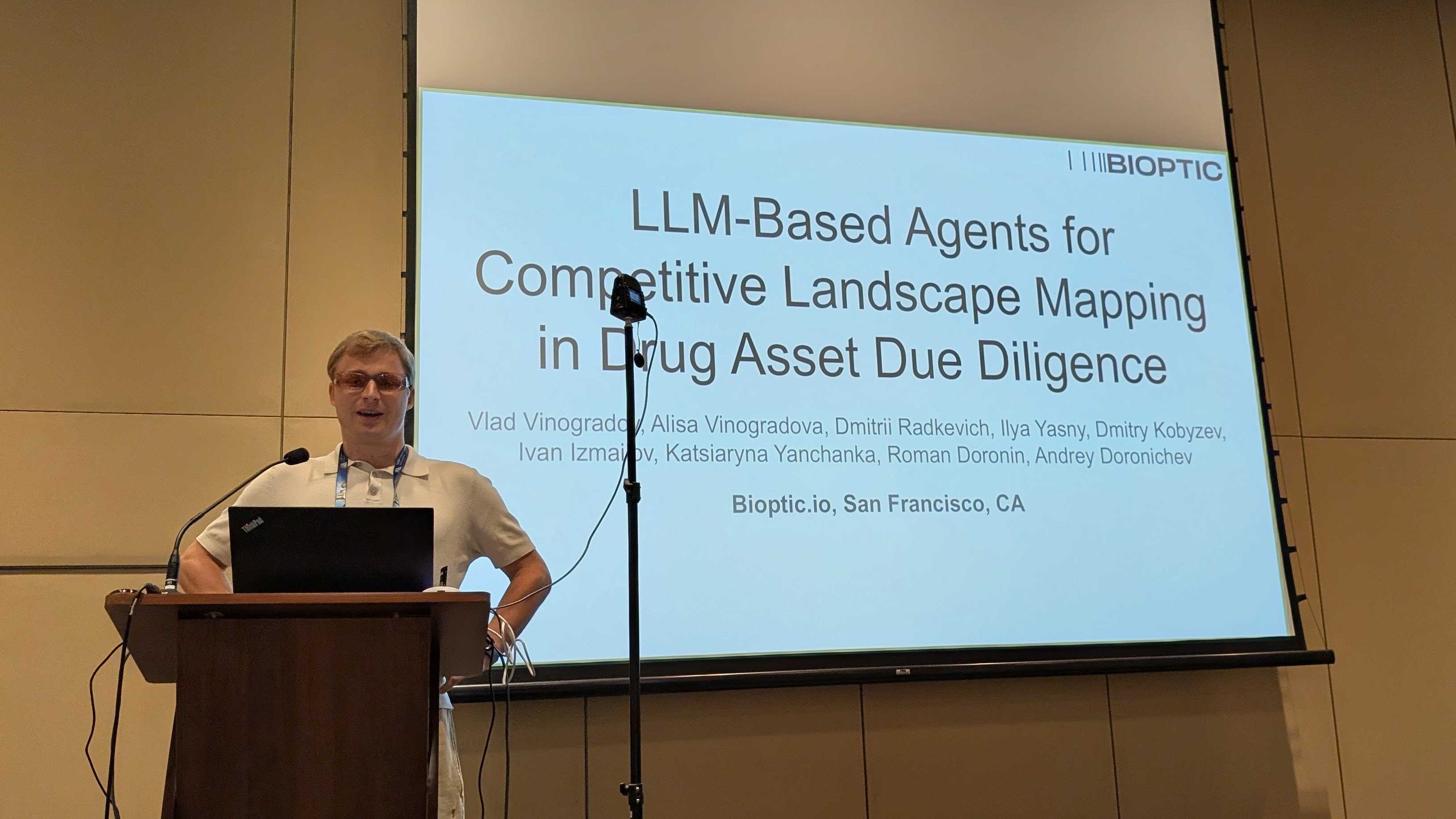
What we presented
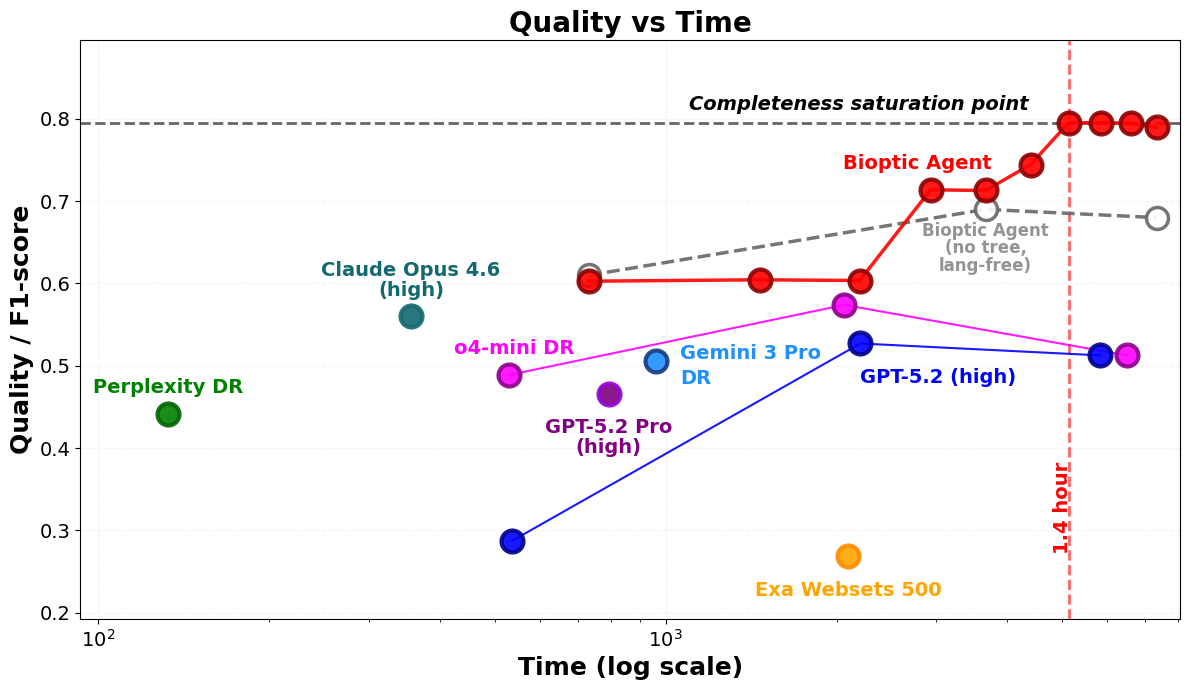
The work shows how agentic LLM systems can map full competitive landscapes in drug due diligence — pulling signal from scientific literature, patents, clinical trials, and press — with higher recall and lower cycle time than general-purpose research tools. In production, this cuts analyst turnaround from days to hours.
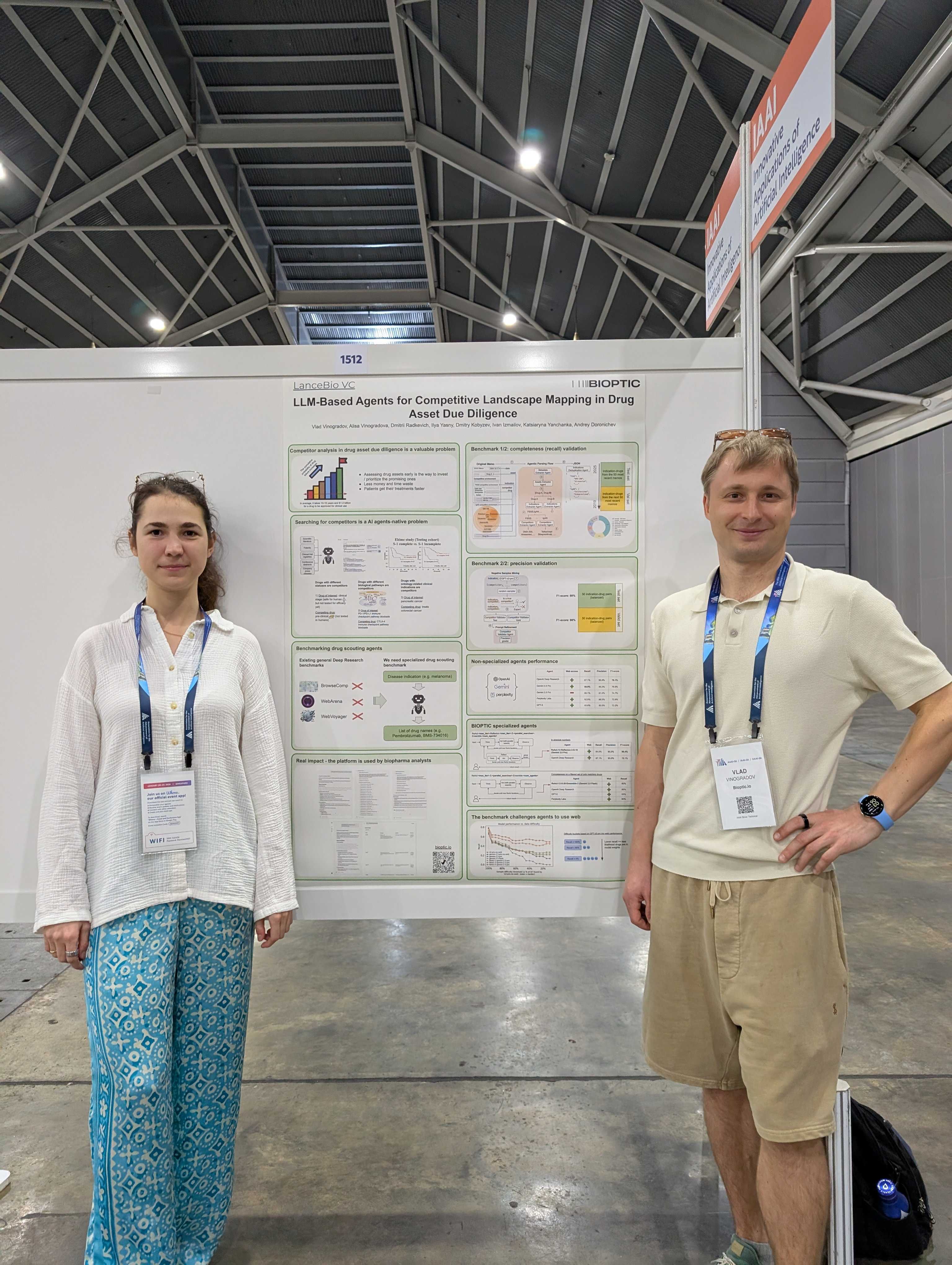
Why the award matters
The Deployed Application award is AAAI’s way of saying: this system doesn’t just work in theory. It works in the real world. The reviewers focused on rigor, benchmarking, and operational impact — exactly where most AI hype breaks down.
The room reaction
We put real effort into the talk and the poster. It showed. Multiple pharma executives stopped for deep technical conversations — not “interesting idea” chats, but “how do we use this?” discussions. That signal is hard to fake.
The bigger picture
This is part of Bioptic’s broader push to build AI agents that operate like junior pharma analysts — fast, thorough, and consistent — so human teams can focus on judgment and strategy.
More soon. But for now, we’re proud of the team, the science, and the fact that this work is already deployed.